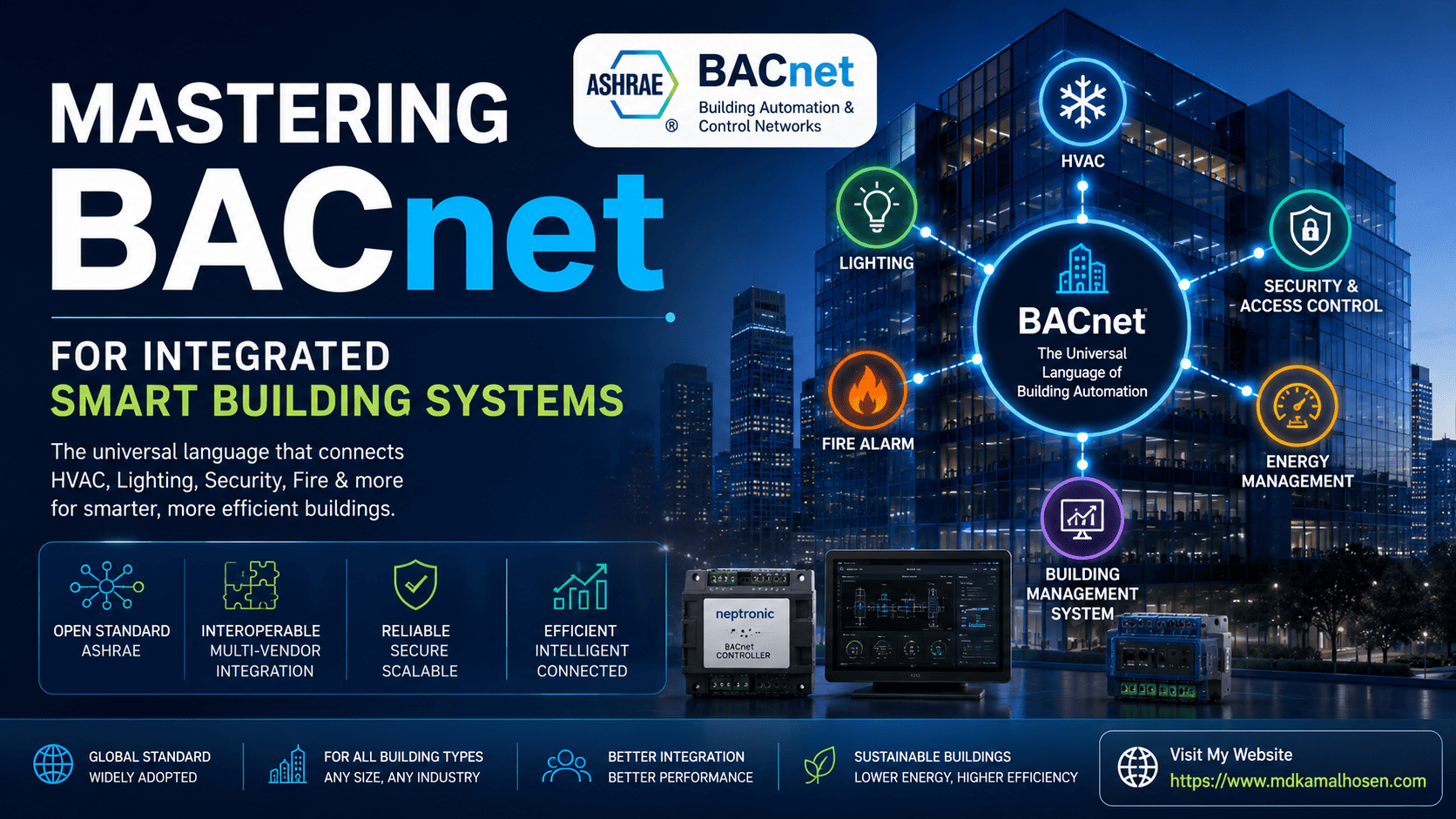
In today's era of smart buildings, seamless communication between building systems is essential for achieving energy efficiency, operational reliability, and occupant comfort. As a Building Automation Engineer, I work daily with the communication protocols that make this integration possible—and one protocol continues to stand out as the industry standard: BACnet (Building Automation and Control Networks).
Developed by ASHRAE, BACnet is an open, vendor-neutral communication protocol specifically designed for Building Automation and Control Systems (BACS). It enables devices from different manufacturers to exchange data and operate together on a single network. Whether you're integrating HVAC, lighting control, access control, fire alarm systems, or energy management, BACnet provides the common language that allows these systems to communicate efficiently and reliably.
Why BACnet Matters
BACnet serves as the foundation for modern Building Management Systems (BMS) by enabling interoperability between equipment from different vendors. Instead of relying on proprietary protocols, building owners and system integrators can deploy scalable and flexible automation solutions that are easier to maintain and expand.
Key Benefits
- ✅ Open and vendor-neutral communication protocol
- ✅ Supports multi-vendor device integration
- ✅ Improves interoperability across building systems
- ✅ Simplifies commissioning and troubleshooting
- ✅ Scalable for projects of any size
- ✅ Widely adopted across the building automation industry
Object-Oriented Architecture
One of BACnet's greatest strengths is its object-oriented architecture.
Rather than using proprietary data formats, BACnet represents every piece of information as standardized objects. Examples include:
- 🌡️ Temperature readings
- 💧 Humidity values
- 🌀 Fan status
- 🚪 Damper positions
- ⚠️ Alarm states
- 📅 Schedules
- 🎯 Setpoints
Each object contains standardized properties, making it easy for devices from different manufacturers to exchange information seamlessly.
This standardized approach significantly reduces engineering complexity while improving integration, diagnostics, and long-term system maintenance.
Multiple Communication Options
BACnet supports several communication technologies, making it suitable for both new installations and legacy building upgrades.
Some of the most common BACnet networks include:
- BACnet/IP
- BACnet MS/TP (RS-485)
- BACnet/SC (Secure Connect)
This flexibility allows engineers to design reliable automation networks for commercial buildings, hospitals, airports, universities, hotels, industrial facilities, and data centers.
Why Every BMS Engineer Should Learn BACnet
From my experience working on Building Management System (BMS) projects, understanding BACnet is far more than a technical advantage—it's an essential engineering skill.
Whether you're:
- Configuring controllers
- Integrating third-party equipment
- Mapping BACnet objects
- Commissioning HVAC systems
- Troubleshooting communication issues
- Optimizing building performance
...BACnet knowledge will help you build smarter, more reliable, and future-ready automation systems.
As buildings continue evolving toward IoT-enabled, AI-assisted, and data-driven environments, BACnet remains one of the most important technologies powering intelligent buildings worldwide.
Final Thoughts
Mastering BACnet is one of the best investments any Building Automation or BMS Engineer can make. Its open architecture, interoperability, and industry-wide adoption make it the backbone of integrated smart building systems.
Whether you're just beginning your BMS career or managing enterprise-scale automation projects, a strong understanding of BACnet will help you deliver more efficient, scalable, and intelligent solutions.
💬 Join the Discussion
What are your favorite BACnet tips, best practices, or troubleshooting techniques?
I'd love to hear your experiences and insights—share them in the comments below!
Comments (0)
Comments are reviewed before they appear publicly.
No comments yet. Be the first to share your thoughts.